Article is available in ASL, scroll down to see video at the bottom of the page.
As the dawn of the new year approaches, many of us find ourselves reflecting on the past – our challenges, accomplishments and areas of growth. I don’t believe the new year has to be the only time we set new goals, in fact, I encourage folks to make meaningful changes throughout the year, however, with that said, there’s nothing wrong with using this fresh start as motivation.
If you are planning to set a nutrition- or health-related intention this year, I want to take a moment to talk about a hot topic you’ve likely heard about already: what makes a healthy gut.
Gut health isn’t a new idea by any means, but it’s really been over the last 20 years that advances in microbiology and nutrition research have led to an explosion in what we understand about the gut microbiome and its impact on health. We now know that the trillions of microbes living in our digestive tract (primarily the large intestine) do more than just help us break down food, they also play a role in immunity, metabolism and even mood.
If brain health and nutrition is a topic you’d like to explore further, you might enjoy this blog covering the MIND eating pattern.
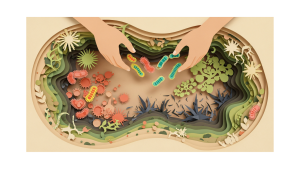
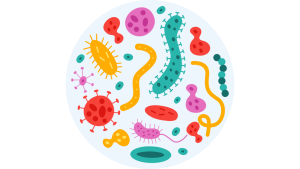
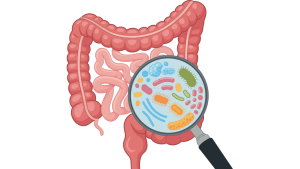
Our gut is home to trillions of microorganisms (good and bad), essentially, we have an entire ecosystem living inside us! Mostly made up of bacteria, viruses, fungi and other tiny microbes but this entire community is called your gut microbiome and despite being microscopic, it plays a massive role in your overall health.
Health benefits of having a healthy gut1:
- Improved digestion and nutrient absorption
- Strong immune system
- Protection against harmful bacteria
- Reduced inflammation
- Better brain health
May also help reduce risk of certain chronic conditions such as diabetes, inflammatory bowel disease, GI disorders, cardiovascular disease and more.
A healthy gut isn’t about having the most bacteria, it’s about having the right balance of beneficial microbes. A balanced microbiome is one where there is a healthy variety of different microorganisms.
Gut-brain axis
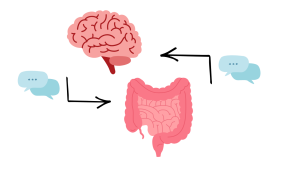
Did you know that scientists call our gut the “second brain” because it contains the largest collection of neurons outside the brain – about 100 million of them! This network is known as the enteric nervous system, and it communicates directly with your brain through a two-way pathway called the gut-brain axis. They can send messages to each other via the vagus nerve.
Fun Fact: “About 80% of the neurons in the vagus nerve are sending messages coming from the gut to brain”2.
This connection matters because your gut microbiome can influence more than just digestion. The microbes produce metabolites and neuroactive substances which can impact immune function, inflammation levels and even how your brain functions. When the gut microbiome is supported, these systems tend to function more smoothly.
That’s why gut health isn’t just about digestion – it’s connected to how you feel overall.
Nutrition Tips for a Healthier Gut
A healthy gut thrives on consistency, variety and the right mix of foods that support your microbes. Simple additions to your daily routine can make a big difference! Here are some nutritional habits that are manageable and impactful that you can start with.
Probiotic-rich foods
Probiotics introduce beneficial bacteria into your gut. These can support digestion, regularity, immune function and help maintain microbial balance.
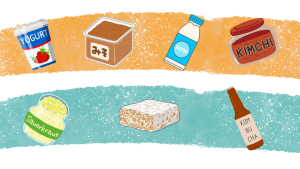
Food sources of probiotics in no particular order:
1.Yogurt with live and active cultures
Not all yogurts automatically contain probiotics. Some are heat-treated after fermentation, which kills the beneficial bacteria. To ensure you are getting live cultures, here is what to look for:
- Look for the LAC seal on the back indicating that the product contains significant levels of live and active cultures. The use of the LAC seal is voluntary so some yogurt brands may contain live and active cultures but not carry the seal. If this is the case, check the ingredient list for these types of statements:
- “Contains live and active cultures”
- “Live cultures added after pasteurization”
- “Active probiotics”
You may also see the name of specific cultures in the ingredient list:
- Lactobacillus bulgaricus
- Streptococcus thermophilus
- Lactobacillus acidophilus
- Bifidobacterium lactis
Greek, regular, dairy-free – all have the possibility of containing probiotics. The type of yogurt doesn’t matter as much as the labeling. Dairy-free yogurts (almond, coconut, soy) can also contain live cultures if they’re added after fermentation
2. Miso
Such a great source of probiotics because it’s made through fermentation but avoid boiling it! The high heat kills the live cultures, meaning you’ll still get the flavor and other nutrients but not the probiotic benefits.
If you use it for a soup or broth, try this:
- Prepare your soup, broth or dish as usual
- Turn off the heat or let it cool slightly
- Then whisk/stir in the miso paste at the end.
This simple step helps preserve the live bacteria while still adding that savory umami flavor miso is known for.
Other food sources of probiotics & simple ways to integrate into your eating pattern:
3. Kefir
- Add to protein smoothie
4. Sauerkraut or Kimchi
- Atop eggs or avocado toast
- In sandwiches
- Rice bowls
- Beside roasted meats
5. Tempeh
- Incorporate into meals like you would any animal protein: stir-fries, tacos, soups.
6. Kombucha (unsweetened or lightly sweetened)
Prebiotics
Prebiotics are a type of indigestible fiber that nourishes the bacteria already residing in our gut promoting their growth and activity to improve digestion, nutrient absorption, and overall gut health3. Prebiotic rich foods & simple ways to integrate them into your eating pattern:
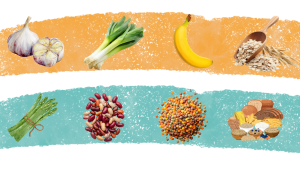
- Garlic or onions
- Cook with most meals
- Leeks
- Bananas
- Add banana to oatmeal or yogurt
- Oats
- Asparagus
- Beans and lentils
- Add spoonfuls to your salads, tacos or rice bowls
- Certain whole grains
Both are important. Probiotics add helpful bacteria, while prebiotics help keep the bacteria in your gut alive and functioning.
Are There Any Risks or Side Effects to Probiotics from Food?
For most healthy individuals, probiotic-rich foods are safe and well tolerated when introduced gradually. That said, everyone’s gut is different, and it’s normal to notice some changes as your microbiome adjusts.
Some folks may experience mild bloating, gas or changes in bowel movements. These symptoms are often temporary and tend to improve as your gut adapts. Starting with small portions and increasing slowly can help minimize discomfort.
Who should use extra caution4? Certain individuals who have these cases should consult with their healthcare provider or Registered Dietitian to get individualized guidance.
- Have chronic gastrointestinal conditions (IBS, IBD, SIBO)
- Are immunocompromised
- Are recovering from a major illness or surgery
- Severe acute pancreatitis
- Are taking certain medications
More research is needed to fully understand pre- and probiotics on overall body function as although they have shown promise that they can be helpful to the gut, it hasn’t yet been proven they improve health and are safe for everyone4.
All in all, supporting your gut doesn’t require perfection or an extreme approach! Small consistent choices such as adding fermented foods, eating fiber rich whole foods and paying attention to how your body responds can go a long way!
What are some of your gut-healthy foods? Share any comments/questions below or send them to nutritioncorner@jaynolan.org.
Medical Advice Disclaimer: The information provided on this blog is for informational and educational purposes only. No material provided in this blog, including images and graphics, is intended as a substitute for professional medical advice, diagnosis, or treatment. Always seek the advice of your physician or other qualified health care provider before making any dietary changes or starting a new health care regimen. Do not neglect professional advice because of what you may have read in this blog.
References
1. Warner, Lindsay. “5 Simple Ways to Improve Gut Health.” Harvard Health, 20 Feb. 2025, https://www.health.harvard.edu/staying-healthy/5-simple-ways-to-improve-gut-health.
2. “The Brain Gut Connection.” Media Planet. Canadian Digestive Health Foundation, https://cdhf.ca/en/mediaplanet-the-brain-gut-connection/.
3. Do Prebiotics Really Impact Your Gut Health? – Healthy Gut Initiative. https://thehealthygut.org/do-prebiotics-really-impact-your-gut-health/.
4. Boyle, Robert J, et al. “Probiotic Use in Clinical Practice: What Are the Risks? 2.” The American Journal of Clinical Nutrition, vol. 83, no. 6, June 2006, pp. 1256–64. ScienceDirect, https://doi.org/10.1093/ajcn/83.6.1256.