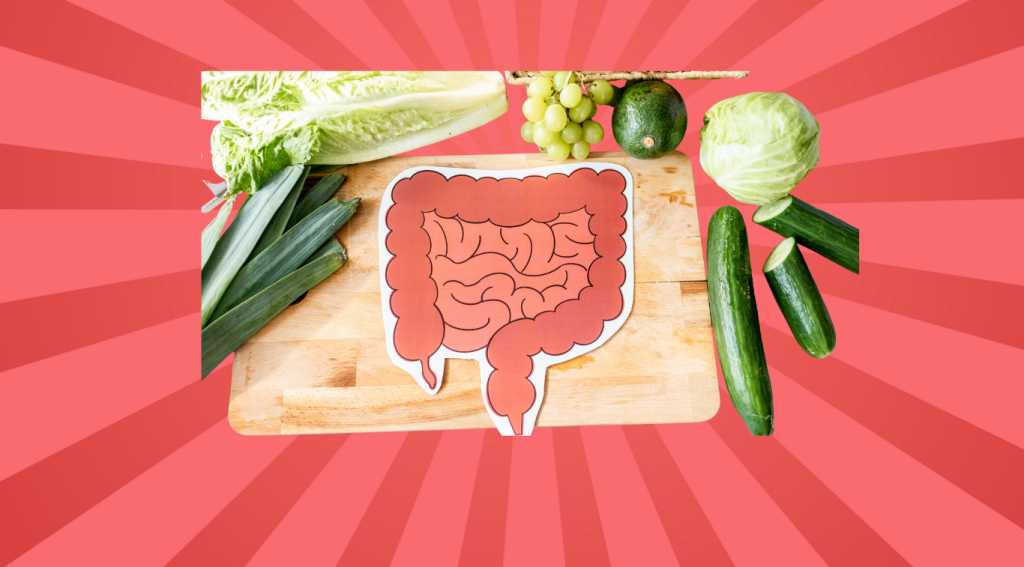
In part one of this two-part gut health series, we explored gut health through a nutrition lens, focusing on pre- and probiotics. In this follow up, we’re continuing the conversation by highlighting fiber and its role in gut health.
This article is available in ASL, scroll down to see video at the bottom of the page.

Fiber is a type of carbohydrate, the part of plant food that your body cannot fully digest. Instead of being broken down like other nutrients such as fat, protein and other carbohydrates (starches and sugars), fiber travels through the stomach, small intestine and lastly through the colon and out the body and supports gut function in several important ways:
- Regular bowel movements

- Promotes steadier blood sugar and energy
- Contributes to feelings of fullness and satisfaction
- Helps reduce unhealthy levels of cholesterol (especially soluble fiber!)
- Feeds beneficial gut bacteria (especially prebiotic fibers)
- If you recall, prebiotics are fibers, but not all fiber functions as a prebiotic!
As stated, we cannot digest fiber, but our gut bacteria ferments it as their primary energy source, produces healthy by products such as vital short-chain fatty acids, and also prevents “bad” bacteria from taking over. Different types of fiber influence the microbiome in specific ways, that is why consuming a variety of fiber-rich whole foods (fruits, vegetables, legumes, whole grains) is important for maintaining microbial balance and function.
Different Fibers
You don’t need to memorize the categories, but it helps to know that different fibers behave differently in the body.
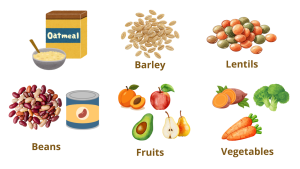
Soluble fiber – dissolves in water and can help slow digestion (make you feel fuller), support blood sugar balance, and help eliminate “bad” cholesterol in the body
-
- Whole grains such as oats and barley; nuts and seeds; lentils and peas; fruits like apple, avocado, pear and nectarine; vegetables such as carrots, sweet potato and broccoli
- Insoluble fiber – adds bulk to stool and helps move food through the digestive tract and prevent constipation.
-
- whole grains such as wheat bran, quinoa, brown rice; lentils; nut and seeds; fruits like berries, grapes, tomatoes; vegetables like cauliflower, leafy greens, green beans or zucchini
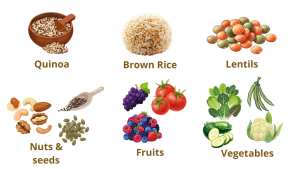
As you might have guessed after reviewing the list, consuming a wide range of plant-based food ensures a healthy intake of both fiber types!
Daily Fiber Needs
The USDA daily fiber recommendations are based on general guidelines of about 14 grams of fiber per 1,000 calories consumed. This means individual fiber needs can vary depending on overall energy intake, sex and life stage.
The age and sex-specific recommendations below from the USDA reflect average calories needs for different groups and can be used as a practical starting point4.
- Adult women <50 years: 25-28 grams per day
- Adult men <50 years: 31-34 grams per day (Some guidelines say 38 grams per day)

- Adult women 51+ : 22 grams per day
- Adult men 51+ : 28-30 grams
Many adults fall short of these recommendations. If you are currently eating much less fiber, jumping straight to these amounts can cause discomfort. Increase fiber slowly, about 2-5 grams every few days and slowly work up to the daily suggestion based on your needs. Drink adequate fluids to stay hydrated and pay attention to how your body responds.
“Fibermaxxing” Trend
Prebiotic sodas!
High-fiber protein bars!
“Gut friendly” Baked Goods!
The uptick in fiber-fortified food and beverage products may have something to do with the “Fibermaxxing” trend on social media that basically promotes people to increase their fiber intake. According to a statistic from the U.S Department of Agriculture 2020-2025, “90% of women and 97% of men do not meet the recommended intake for dietary fiber”1. Yikes! Maybe this trend could pose its benefits!
Added or isolated fibers are added to food and beverage products typically by the ingredient names: inulin, chicory root fiber, psyllium or resistant starch. Is the “fibermaxxing” trend something you should be following? Are isolated fibers equal to whole food fiber?
The FDA has recognized several added fibers as having demonstrated physiological benefits including2:
- Improved laxation
- Lower LDL cholesterol
- Improved blood glucose response
- Support for digestive health
Clinical trials have shown that certain added fibers (especially psyllium and beta glucan) are effective for cholesterol lowering and glycemic control, and fermentable fibers like inulin can increase beneficial bacteria such as bifidobacterium2.
However, research also shows that certain isolated fibers in large amounts, especially in a short period of time, may contribute to3
- Bloating
- Pain
- Gas
- Altered bowel movements
While these added or isolated fibers aren’t inherently harmful, the “fibermaxxing” message that “more fiber is always better” can backfire and is misleading. Dose, type and rate of increase matter and it goes to show everyone responds differently.
Whole foods vs Isolated fiber
It’s also important to note that while certain isolated fibers have demonstrated some health benefits, their long-term health effects are still being studied.
Fiber from whole foods on the other hand, through many studies, from large observational to randomized control trials, associate fiber from whole foods with reduced risk of
- Cardiovascular disease
- Type 2 diabetes
- Certain cancers
- Chronic inflammation
These benefits likely come not just from fiber itself, but from the full food matrix, including polyphenols, micronutrients, and other bioactive compounds that isolated fibers do not provide. Given the need for more research surrounding isolated fibers, this can be another helpful reason to focus on including more fiber from whole foods.
A Balanced Take
Rather than thinking in terms of “good” versus “bad” fiber, a more helpful approach can be it’s okay to include both!
- Whole foods should make up the foundation of fiber intake
- Added fibers can supplement, not replace, whole food sources
What are some of your gut-healthy foods? Share any comments/questions below or send them to nutritioncorner@jaynolan.org.
Access this article in ASL:
Medical Advice Disclaimer: The information provided on this blog is for informational and educational purposes only. No material provided in this blog, including images and graphics, is intended as a substitute for professional medical advice, diagnosis, or treatment. Always seek the advice of your physician or other qualified health care provider before making any dietary changes or starting a new health care regimen. Do not neglect professional advice because of what you may have read in this blog.
References:
1. U.S. Department of Agriculture and National Institutes of Health . Dietary Guidelines for Americans 2020–2025. 9th ed. US Department of Agriculture and US National Institutes of Health; Washington, DC, USA: 2020.
2. Staff, Editorial. “Are Added Fibers Good for Our Health?” Tufts Health & Nutrition Letter, 7 Dec. 2018, https://www.nutritionletter.tufts.edu/special-reports/are-added-fibers-good-for-our-health/.
3. McRorie, Johnson W., and Nicola M. McKeown. “Understanding the Physics of Functional Fibers in the Gastrointestinal Tract: An Evidence-Based Approach to Resolving Enduring Misconceptions about Insoluble and Soluble Fiber.” Journal of the Academy of Nutrition and Dietetics, vol. 117, no. 2, Feb. 2017, pp. 251–64. ScienceDirect, https://doi.org/10.1016/j.jand.2016.09.021.
4. Dietary Guidelines for Americans, 2020-2025.